
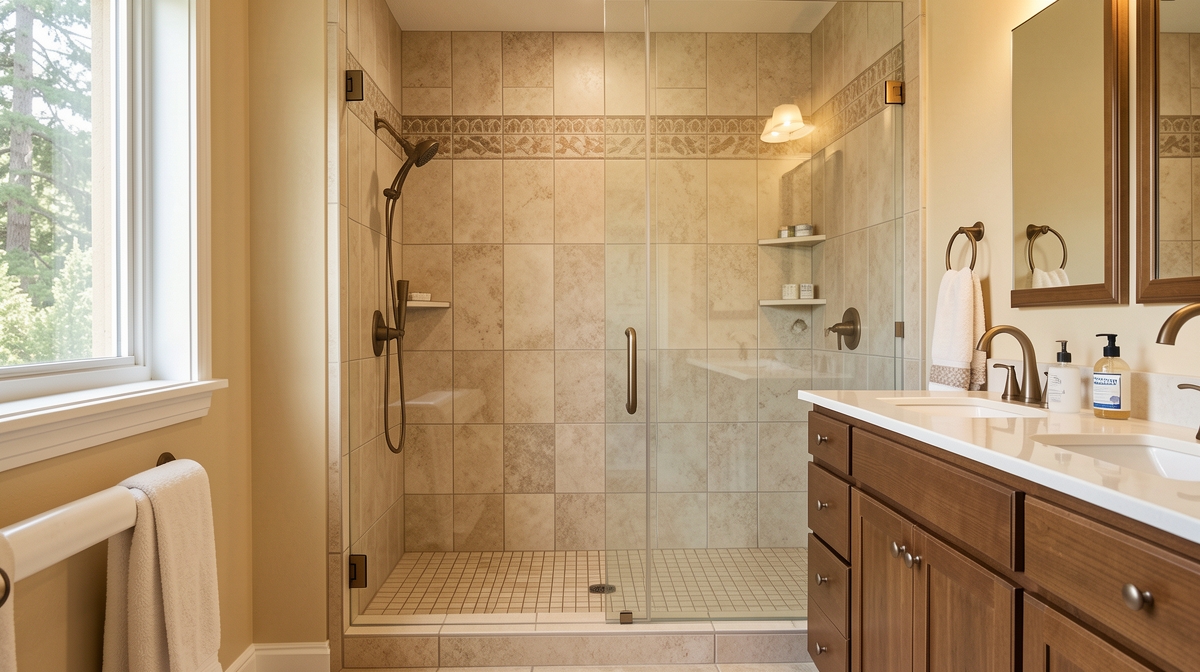
A stack of tile boxes in the hallway, a waterproofed shower wall, and a bucket of thinset ready to mix — it looks like everything is in place. Then the rainy months settle over Marin, indoor humidity creeps up, and small details in your plan start to matter more than they did in August. Tiling bathroom walls is one of those projects where the products, the substrate, and the conditions all have to agree with each other.
The good news is that most rainy-season tile problems announce themselves early, if you know what to look for. A mortar bag that names the wrong substrate, a stone that needs special setting materials, or a grout day that keeps sliding are all signs worth catching before tile goes on the wall.
Here are the warning signs homeowners in San Rafael and around Marin County can spot themselves, what each one means, and when it’s time to bring in a pro.
Sign 1: Grout Day Keeps Slipping Because the Mortar Won’t Dry
If your installer keeps postponing grout, or a test spot of mortar still feels soft days after setting tile, the mortar chemistry may be working against your conditions. Not all thinsets cure the same way, and humidity affects them differently.
- Unmodified portland-cement thinsets depend on moisture to hydrate and gain strength. After reaching final set, usually within 24 hours, they actually achieve higher strengths when cured in continually moist conditions. Damp weather isn’t automatically the enemy.
- Modified thinsets are the humidity-sensitive case. Their polymers must dry to coalesce and form a hard film, and when the mortar sits between an impervious waterproofing membrane and dense porcelain tile, drying happens very slowly through the open grout joints.
- According to the Tile Council of North America’s Handbook, that drying period can range from 14 days to over 60 days depending on geographic location, climate, and whether the installation is interior or exterior. Skipping the extended cure can produce unpredictable results, and wet areas like showers add the concern of latex leaching.
- Manufacturers rate working properties at 70°F, and they vary with jobsite conditions. Dry time also varies with tile size and density.
To be clear, this is a material drying window over impervious membranes — it doesn’t mean tiling bathroom walls takes two months. But it does mean the mortar choice should match the membrane and the season. If your project pairs a waterproofing membrane with large porcelain tile and a modified mortar, that’s a conversation for a professional installer before the first trowel of thinset goes up.
Sign 2: The Product Labels Don’t Match What’s on Your Wall
Read the fine print on the mortar bag or bucket and compare it to your actual wall assembly. If the two disagree, stop. This is one of the most common rainy-season planning mistakes, because it’s invisible until the tile fails.
- Some pre-mixed thinsets state they must not be used over non-porous surfaces such as waterproofing membranes or coated backer board. If your shower walls carry a membrane, a bucket of pre-mixed adhesive from the shelf may be the wrong product entirely.
- Membrane systems often specify their mortars. Schluter, for example, requires its own SET, ALL-SET, or FAST-SET mortars, or an unmodified thinset meeting ANSI A118.1, over its KERDI membrane.
- Thinset itself is meant purely as an adhesive layer, unlike a thicker structural mortar bed that provides support. It can’t fix an out-of-plane wall, so substrate prep still matters.
If you’re not certain which system is behind your walls, or which mortar that system requires, that’s a clear signal to have a pro confirm the pairing. Miconi Marble & Tile handles design, material selection, supply, and installation from our San Rafael showroom, so you can match tile, setting materials, and substrate in one conversation instead of guessing across three stores.
Sign 3: Your Tile or Stone Needs Special Setting Materials
Fell in love with green marble, glass mosaic, or a resin-backed decorative tile? Beautiful choices, but they come with a warning sign printed right on many mortar data sheets: standard thinsets are not recommended for moisture-sensitive stone, resin-backed tile, or glass tile.
Moisture-sensitive stones such as green marble may require special setting materials, because ordinary water-based mortars can affect them during that long, humid drying window. In a damp Marin winter, when interior drying already runs slow, using the wrong mortar under a sensitive stone compounds the risk. What this means for you: if your tile selection falls into any of these categories, the setting material isn’t a commodity purchase. Ask which mortar the tile manufacturer specifies, and have an experienced installer confirm it suits both the tile and the substrate.
Sign 4: Your Schedule Assumes Everything Dries Overnight
If your project plan shows waterproofing one day and tile the next with no cushion, that’s a symptom of an over-optimistic schedule — especially in the wetter months, when interior humidity and ventilation slow drying for some products. The fix isn’t panic; it’s picking systems designed for the timeline you actually have.
- Ask about rapid-cure options. Certain fast-cure waterproofing membranes are fully cured once dry to the touch and ready for flood testing and tile installation, and paired rapid-cure slope and membrane products can prepare a shower in hours rather than days.
- Confirm the mortar’s cure requirements before setting a grout date, since conditions, tile size, and density all shift that window.
- Build ventilation into the plan. Running exhaust fans and keeping the room conditioned helps drying-dependent products do their job.
Whole-project timing still depends on scope, product instructions, substrate, and site conditions, so treat any schedule as conditional until an installer sees the space.
Plan Wall Work With Realistic Expectations
None of these warning signs means rainy-season tile work is a bad idea. Interior projects proceed year-round when the mortar matches the membrane, the setting materials match the tile, and the schedule respects real drying windows. Catching a mismatched product label or a sensitive stone before installation costs you a conversation; catching it afterward costs you a wall.
Ready to plan tiling bathroom walls with materials that suit your home and the season? Miconi Marble & Tile, family owned and operated in San Rafael since 1994, serves homeowners across Marin County with design help, a 6,000-square-foot showroom, and professional installation. Contact us to schedule a bathroom wall tile consultation and get your project matched to the right system from day one.